The d33 coefficient is the primary benchmark for piezoelectric component quality. It represents how effectively a piezoelectric material or element converts mechanical stress into electrical charge, and vice versa, helping you compare components and processes. Explore this guide to learn more about what d33 is, what it measures and how to choose the right meter for your lab.
Service Highlights
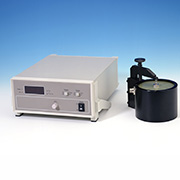
Accurate d33 Measurement for Superior Piezo Quality Control: APC International’s Wide-Range d33 Tester (Cat. # 90-2030.1) provides fast, accurate, and direct readout of the d33 piezoelectric charge constant, serving as a primary benchmark for ensuring the quality and performance of your piezoelectric components.
User-Friendly d33 Meter for Confident Piezoelectric Testing: Our easy-to-operate d33 meter measures d33 values from 1 to 2000 pC/N with high resolution and repeatability, empowering both experts and novices to confidently assess the charge generated per unit of applied force in various piezo elements.
Versatile d33 Tester Accommodates All Piezoelectric Materials: This d33 meter is designed to accommodate a wide variety of ceramic element sizes, shapes, and single crystals, making it an indispensable tool for measuring the d33 constant across your diverse range of piezoelectric materials.
Ensure Reliable Piezo Performance with Our d33 Meter: Utilize APC International’s low-cost, complete, and ready-to-use d33 meter to gain precise confidence in your measurements, verify polarity, and ensure consistent, reliable piezoelectric behavior for all your critical applications.
What Is the d33 Constant and Why Does It Matter?
The d33 value — also known as the piezoelectric charge constant — is a direct indicator of material performance. It measures the charge generated per unit of applied force. Consistent and high d33 values generally reflect reliable piezoelectric behavior, while a low value may indicate defects in the material.
Piezoelectric devices are used in a wide range of industries, including automotive, aerospace, medical device manufacturing and security. These industries use d33 data to qualify materials for vibration sensing, noncontact applications and precision actuation, ensuring dependable application performance.
Reliable d33 measurement depends on key standards, calibration practices and routine upkeep. Each factor contributes to precise measurement confidence, comparability and repeatability:
Measurement process: A d33 meter applies a controlled force to a sample and records the electrical charge produced. This direct measurement provides a clear view of the piezoelectric response.
Standards and calibration: Measurement accuracy depends on following recognized industry standards and calibrating with a traceable reference sample. Calibration certificates confirm that the instrument meets accepted benchmarks.
Maintenance: Routine care, including keeping probes clean and checking connections, helps preserve accuracy. It also extends the life of the d33 meter.
Choosing the Right d33 Meter for Your Lab
Selecting the right d33 meter depends on your specific application, resolution needs and budget.
d33 Meter type Comparison
ASPECT
LOW-RANGE METERS
WIDE-RANGE METERS
STANDARD BENCHTOP METERS
Typical Measurement Range
Narrow (1-200 pC/N)
Broad (1-2,000 pC/N)
Medium (10-2,000 pC/N)
Primary Use Case
Educational and basic quality control checks
Versatile research, development and high precision quality control
General lab and production use
Resolution
Lower
High
Standard
Price Consideration
Lower initial cost and affordable entry option
High value for broader capabilities
Higher initial investment and ideal for established labs
Why Trust APC International?
APC International provides high-quality, wide-range d33 testers, piezoelectric components and industry-leading expertise. Our commitment to quality and partnership is built on several key pillars:
Over 35 years of leadership: We have been a premier manufacturer at the forefront of the piezoelectric industry since 1986.
Expert team of engineers: Our materials scientists and electrical engineers partner with clients from the most demanding fields.
Proven quality at scale: We have successfully manufactured millions of high-purity piezoelectric devices.
Industry dedication: Our company invests heavily in sharing knowledge with the community through valuable resources.
Have questions about APC International’s piezo products? Contact us or call us at (570)726-6961 to learn more information.
Get d33 Testing Solutions for Your Lab
Accurate d33 measurement helps labs achieve consistent results and supports reliable application performance. Contact us today to learn more about our piezoelectric testing equipment.
The piezoelectric charge constant, d, is the mechanical strain experienced by a piezoelectric element per unit of electrical energy applied, or, alternatively, is the electrical energy generated by the element per unit of mechanical stress applied. Defects in a ceramic, due to incorrect composition, processing inconsistencies, or other problems, are reflected by a low d33 value.
Our wide-range d33 tester is capable of measuring d33 values from 1 – 200 pC/N or 10 – 2000 pC/N, at high resolution, with a high degree of reliability.
Complete and ready to use for measuring d33 values, determining polarity, stable reference sample for calibrating the d33 meter included.
Sign Up For Our Newsletter
Stay Up To Date With Our Latest Products And Services
By submitting this form, you are consenting to receive marketing emails from: . You can revoke your consent to receive emails at any time by using the SafeUnsubscribe® link, found at the bottom of every email. Emails are serviced by Constant Contact